
An Automotive HVAC Manikin is a specialized laboratory testing device designed for evaluating the performance of automotive air conditioning systems and assessing thermal comfort within a vehicle cabin. By simulating the heat exchange processes that occur between a human body and the cabin environment, the manikin measures the heat transfer at various body segments, thereby enabling an evaluation of the HVAC system’s cooling, heating, ventilation, and temperature-regulation capabilities.
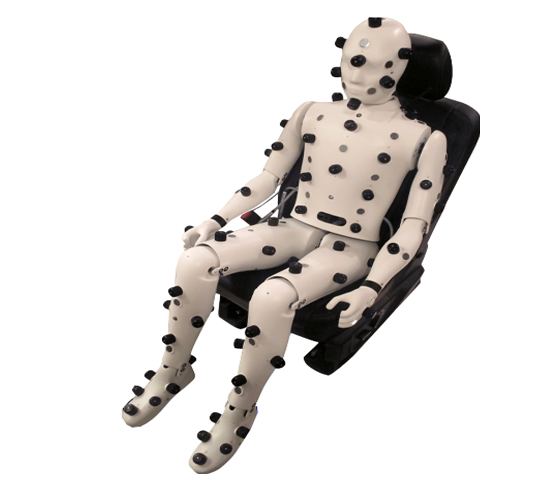
The Automotive HVAC Manikin operates by simulating the heat exchange between a human body and the environment inside a vehicle cabin. It measures and analyzes the heat transfer occurring at different parts of the body, which is then used to assess the performance of the automotive HVAC system—including its cooling, heating, and ventilation functions—as well as the resulting human thermal comfort. The device typically features a human-shaped structure divided into multiple independent test zones, such as the head, neck, chest, back, abdomen, arms, thighs, lower legs, and feet. Each zone can be equipped with its own heating elements and temperature sensors; some models also incorporate heat flux sensors to simulate and measure the heat exchange processes taking place at the body's surface. During testing, the Automotive HVAC Manikin is first positioned... The thermal manikin is placed on the driver’s or passenger’s seat, with its posture and position adjusted according to specific test requirements. A control system then activates the manikin’s zonal heating elements, bringing various body segments to pre-set surface temperatures or heat output levels; this simulates the heat dissipation process of a human body during normal physiological activity. Once the vehicle’s air conditioning (HVAC) system is engaged, the air—whether cooled or heated—discharged from the vents creates airflow patterns with varying directions and velocities throughout the cabin. As these air currents interact with different parts of the manikin—such as the head, chest, arms, and legs—they induce varying degrees of convective heat transfer. Simultaneously, thermal radiation from surfaces like the windows, dashboard, roof, seats, and other interior components further influences the manikin’s heat exchange. Throughout the test, a data acquisition system records real-time information—including temperatures, heat flux, heating power, and environmental parameters—which is then processed and analyzed using specialized software. By examining this data, engineers can compare how different HVAC settings—such as operating modes, vent orientation, airflow volume, and temperature—affect human heat exchange, ultimately determining whether the vehicle’s climate control system can provide a uniform, stable, and comfortable thermal environment for the driver and passengers.
Through zonal heating and integrated sensors, the thermal manikin simulates human heat exchange under diverse environmental conditions. Testers can evaluate the thermal state of individual body segments... By measuring data such as temperature, heat flux, or heating power, it is possible to analyze the impact of an air conditioning (AC) system on human thermal comfort, thereby reducing the subjectivity inherent in human-based evaluations. Different parts of the human body perceive temperature and airflow in distinct ways; for instance, the head, chest, arms, legs, and feet may each be exposed to different thermal and airflow conditions. Through zonal measurement, thermal manikins enable testers to identify issues such as localized overcooling, overheating, or uneven temperature distribution within a vehicle cabin. By testing various parameters—including AC vent positioning, airflow volume, air velocity, temperature settings, and airflow direction—researchers can analyze how an AC system affects specific parts of the human body. Such data assists automotive manufacturers in optimizing AC duct design, vent layout, and airflow distribution, ultimately enhancing the overall performance of the climate control system. Thermal manikins can be employed for both cooling and heating tests, allowing for the analysis of heat exchange between the human body and the cabin environment under various operating modes. For example, in summer cooling tests, one can evaluate whether cold air reaches all parts of the body uniformly, while in winter heating tests, it is possible to analyze the temperature distribution across the feet, legs, and upper body. Given the limited space within a vehicle cabin, different seating positions and body areas may be subject to varying airflow conditions. Testing with thermal manikins helps uncover thermal disparities—whether between the driver’s and passengers’ positions or between the upper and lower body—providing a basis for improving temperature uniformity throughout the vehicle interior.
During the development of automotive HVAC (heating, ventilation, and air conditioning) systems, thermal manikins are used to simulate human heat exchange under various operating conditions. By testing the impact of factors such as air vent placement, supply air temperature, airflow volume, and airflow direction on different parts of the human body, engineers can evaluate the cooling and heating performance of the HVAC system, optimize its structure and control strategies, and enhance overall thermal comfort. Within an automotive cabin, conditions such as temperature, air velocity, and thermal radiation can vary significantly from one location to another. Thermal manikins allow for localized measurements across different body regions—including the head, chest, arms, legs, and feet—enabling researchers to assess the thermal environment experienced by the human body, evaluate in-cabin thermal comfort, and identify issues such as localized overcooling, overheating, or uneven thermal distribution. In both summer cooling and winter heating tests, thermal manikins simulate human thermal loads, facilitating the analysis of heat exchange between the human body and the cabin environment during HVAC operation. By comparing temperature and heat flux variations across different body regions under various operating modes, engineers can assess the system's actual effectiveness in regulating the thermal environment, providing a basis for improving HVAC response times and temperature control precision.
Automotive HVAC manikins play a vital role in optimizing HVAC system design, improving in-cabin temperature distribution, and enhancing cooling and heating performance. They provide reliable data to support automotive manufacturers in HVAC system development, performance validation, and thermal comfort testing. As the automotive industry places an increasing emphasis on occupant comfort, intelligent climate control, and energy efficiency, thermal manikins have become an essential testing tool for research into automotive thermal comfort and the development of HVAC systems.
