
A seat belt test dummy is a human-like device used to evaluate the performance of automotive seatbelts and occupant restraint systems. By replicating human body dimensions, weight, and specific biomechanical characteristics, these dummies enable testers to assess the effectiveness of restraints, the forces applied, and overall safety performance under various usage conditions. They are commonly employed by vehicle manufacturers, automotive component suppliers, and specialized testing laboratories. Depending on the dummy’s design and the specific testing requirements, it can simulate how occupants of different body types are affected by seatbelt restraints.
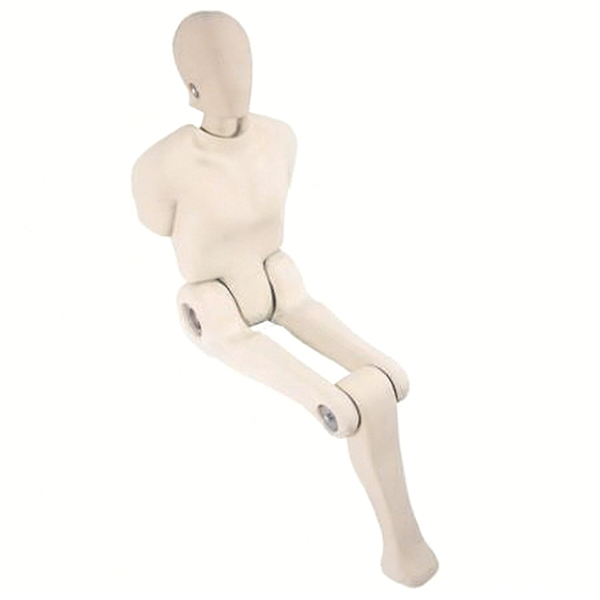
Seatbelt test dummies are specialized testing instruments manufactured in accordance with national standards. They are designed to replicate human weight, dimensions, and the distribution of the center of gravity, allowing for the evaluation of seatbelt performance under scenarios such as dynamic loading, static loading, and positional constraints. Their primary components include a head, neck, chest, abdomen, pelvis, limbs, joint mechanisms, and a system of measurement sensors. Together, these elements simulate human movement and the forces experienced while restrained by a seatbelt, providing essential data for evaluating automotive seatbelt performance, conducting occupant protection research, and performing crash tests.
Encased in a rubber layer approximately 40mm thick—with a Shore hardness exceeding 90HD—the device features a contoured exterior designed to simulate the human form, with smooth surface transitions. Apart from the necessary suspension rings, all exposed surfaces are rubber-covered to prevent direct contact between metal components and safety harnesses, which could otherwise compromise test results. The internal structure utilizes section-specific, integrally molded materials to precisely replicate the human center of gravity, with provisions for further adjustment of this center of gravity.
Suspension Rings and Attachment Points: Equipped with high-strength stainless steel connectors, the device facilitates suspension, anchoring, or integration with sled/drop-test systems. Depending on specific testing requirements, certain models feature up to 10 attachment points—strategically located on the chest, back, thighs, head, and crotch—to accommodate various securing methods and load-application scenarios.
Accurately replicates the mass distribution and physical dimensions of a 50th-percentile adult male; employs a modular design that allows for the rapid replacement of head, neck, torso, and leg components; features a skeleton constructed from metal and fiberglass, encased in polyurethane, ensuring high biomechanical fidelity and durability; includes soft chest padding to enable realistic simulation of safety harness loading; offers simple operation and configuration for quick setup and reliable data acquisition; suitable for regulatory compliance testing and a wide range of research applications.
These devices serve as human surrogates for seatbelt testing, designed to replicate human height, body shape, mass distribution, and anatomical structure. They are used to study the restraint effectiveness of seatbelts, allowing for the observation of seatbelt positioning, fit, and force distribution. Certain specialized crash-test dummies are equipped with sensors to collect data on acceleration and forces acting on the chest, pelvis, and other body regions. These dummies enable repeatable testing under standardized conditions, facilitating the comparison of performance across different seatbelt designs. Depending on the specific model, they can be utilized for static seatbelt testing, dynamic crash testing, or the evaluation of occupant restraint systems.
Simulation of Human Anatomy and Mass: These dummies are engineered to precisely match human weight, dimensions, center of gravity, and joint range of motion. They feature an internal skeletal structure or segmented components, encased in elastic layers that simulate human skin and muscle tissue, ensuring that their inertial response and posture under load closely mirror those of a real human.
Mechanical Force Transmission and Restraint Testing: During testing—whether on a test rig or in a full-scale vehicle crash test—the dummy is properly positioned and secured with a seatbelt. When the system is subjected to a predetermined load, rapid deceleration (such as emergency braking), or a collision, the dummy experiences forward or lateral inertial forces. The seatbelt locks in response, exerting tension and transferring these forces to the dummy’s chest, waist, and shoulder areas.
The dummies are equipped with high-precision accelerometers, force sensors, and displacement sensors. These sensors record real-time data, including peak acceleration during a collision or tensioning event, forces exerted on the thoracic cavity, pressure applied by the seatbelt to the body, and the slippage of the webbing. High-speed cameras are typically used alongside these sensors; by establishing a coordinate system based on specific reference points on both the seatbelt and the dummy’s body, researchers can compare the initial, intermediate, and final positions to precisely calculate seatbelt displacement and overall restraint performance.
Tests involving rubber-based or similar anthropomorphic dummies are used to simulate static and dynamic loads, as well as potential occupant slippage, in order to verify the reliability of seat belt structures and their anchor points. By configuring seat belts and airbags together on a dummy, engineers can use sled tests to optimize parameters such as pretensioner firing timing, load-limiter settings, and webbing elongation. Furthermore, physical data captured by sensors within the dummy—when compared against established human injury criteria—allow for the assessment of a seat belt’s effectiveness in preventing fatal injuries to occupants.
Seat belt test dummies provide a consistent and repeatable means of simulating the human body, enabling automotive manufacturers and testing organizations to analyze how seat belts perform across various test scenarios. The data derived from these tests facilitate the optimization of seat belt architecture, restraint system design, and occupant protection strategies, ultimately reducing the risk of injury to vehicle occupants in the event of a collision.
